

What is it we do,
and how does it work?

Improving AI Visibility, built on real expertise
AdtomicAI helps companies understand how AI systems interpret, represent, and communicate their business. As AI increasingly shapes how customers discover, evaluate, and trust brands, it’s no longer enough to focus only on human audiences. You also need visibility into how algorithms “see” you.
Our approach combines deep AI expertise with more than 25 years of experience in marketing and communication. This unique combination allows us to translate complex AI behavior into clear, actionable insights that align with your brand strategy.
With AdtomicAI, you gain a new layer of understanding. One that helps ensure your business is accurately represented, competitively positioned, and ready for an AI-driven future.

Why we built Adtomic AI
Today, people increasingly ask tools like ChatGPT, Gemini, and Claude to help them understand a market, compare providers, shortlist options, and decide who seems most credible. In many cases, AI forms the first impression of a company before a customer ever visits its website.
That creates a new kind of visibility problem.
A company may have a strong brand, a good website, and loyal customers but still be misunderstood, underrepresented, or overlooked in AI-generated answers.
We combine Adtomic’s experience in brand and communication with hands-on research into how AI systems find, compare, and trust information. The result is a practical way for companies to see how they are represented in AI, understand what shapes those answers, and improve their visibility in the AI-driven customer journey.

What makes our reports valuable
Built on
expertise
Shaped by AI knowledge and more than 25 years of brand and communication experience through Adtomic
Specfic to your
company
Each report analyzes your actual business, not generic AI visibility best practices
Designed for
action
Clear recommendations that show what to improve and where to start
Get clarity on your AI presence, with recommendations you can act on immediately.
How are the reports created?
Our reports are built from research, repeated AI testing, and practical marketing expertise.
We started by spending months studying what actually influences AI search results. Together with our sister company, Adtomic Communications, and selected client cases, we mapped the factors that affect whether a company is found, understood, trusted, and recommended by AI.
From this research, we built a structured method for analysing AI visibility across four areas: technical accessibility, content perception, brand language, and external reputation.
We test how AI sees your company
For each report, we run multiple LLM calls that analyse your website, your competitors, and relevant external sources. These queries are designed to reflect how real customers might ask AI for advice, comparisons, recommendations, or information in your category.
This helps us understand not only whether your company appears in AI answers, but also why it appears, how it is described, and what may be holding it back.
We do not rely on one prompt or one answer
AI answers can vary. That is why we test the same topic in several ways instead of relying on a single result.
Real user query
simulation
We create prompts that reflect the kinds of questions your customers are likely to ask AI.
Query
variation
We test similar prompts with different wording to see whether your visibility changes depending on how the question is asked.
Multi-layered
assessment
We compare your company across different topics, competitors, sources, and customer intents to identify patterns, not just isolated results.
Bias control
We use neutral prompting, fresh context, and repeated testing to reduce the influence of randomness, saved memory, or leading language.
Signal analysis
We look for recurring issues, weak signals, inconsistent positioning, missing information, and external sources that may affect AI’s trust in your company.
Why Traditional SEO Is No Longer Enough
Traditional SEO focuses on ranking pages within search engine results.
AI search changes the discovery model.
Instead of selecting links, users receive generated answers where only a few sources or companies may be mentioned.
This means visibility is no longer determined solely by page ranking. It is determined by whether AI systems understand and trust a brand as part of their knowledge base.
Companies that optimize only for search rankings risk becoming invisible inside AI-generated results.
GEO vs Traditional SEO

Traditional SEO
Optimizes webpages
Targets search engine rankings
Click-driven traffic
Focuses on keywords

Generative Engine Optimization
Optimizes brand discoverability
Targets AI-generated answers
Answer-driven discovery
Focuses on entity recognition
Both disciplines will coexist, but GEO addresses the growing role of conversational AI in how users find information.
Meet the Team
-

Søren Pedersen
FOUNDER - Created AdtomicAI in 2025 as a sister company to support brands in a rapidly evolving AI landscape.
-

Baris Yakaboylu
PARTNER - helping companies strengthen their global brand, sharpening their story and standing out in complex, competitive markets.
-
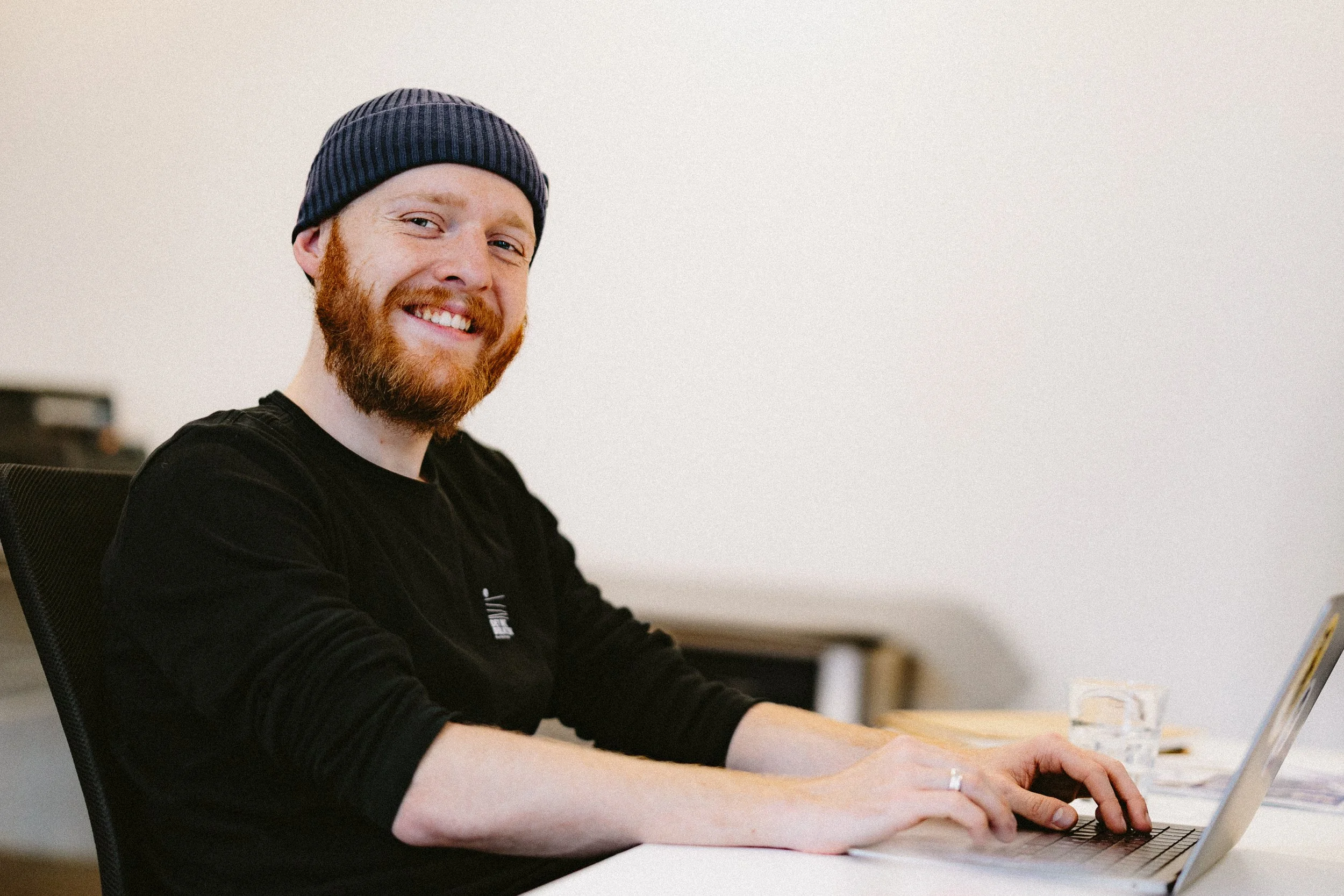
Max Pedersen
AI CONSULTANT
-

Lukas Gray
AI CONSULTANT
-

Saskia Kopietz
AI CONSULTANT